Roadwurx Launches Municipal Referral Program to Reward Highway Departments for Sharing Success

API – Application Programming Interface: A set of rules that lets software components communicate and share data.
AWS – Amazon Web Services: Amazon’s cloud computing platform offering on‑demand infrastructure and managed services.
BYOD – Bring Your Own Device: Policy allowing employees to use their personal devices to access organizational systems.
CAD – Computer‑Aided Dispatch: Software that dispatches and tracks field units and logs incidents in real time.
CapEx – Capital Expenditure: Funds spent to acquire, upgrade, or maintain physical assets.
CJIS – Criminal Justice Information Services: FBI division and security policy governing criminal justice data handling.
CMMS – Computerized Maintenance Management System: Software that schedules, tracks, and documents asset maintenance activities.
COTS – Commercial Off‑The‑Shelf: Ready‑made software or hardware procured as‑is, rather than custom‑built.
CRM – Customer Relationship Management: Platform for managing interactions with customers or constituents.
CSP – Cloud Service Provider: Company that delivers cloud computing services such as IaaS, PaaS, or SaaS.
CSS – Cascading Style Sheets: Language used to describe the presentation of HTML documents.
DMS – Document Management System: Software that stores, tracks, and controls electronic documents and images.
DR – Disaster Recovery: Strategies and processes to restore IT systems and data after an outage.
EDR – Endpoint Detection and Response: Security technology that monitors endpoints and responds to threats.
ERP – Enterprise Resource Planning: Suite that integrates core business processes such as finance, HR, and procurement.
FedRAMP – Federal Risk and Authorization Management Program: U.S. framework for authorizing cloud services for federal use.
FISMA – Federal Information Security Management Act: U.S. law requiring federal agencies to develop security programs.
GIS – Geographic Information System: System for capturing, storing, analyzing, and visualizing spatial data.
GRC – Governance, Risk & Compliance: Integrated approach to aligning IT and business objectives with risk management and compliance requirements.
IaaS – Infrastructure as a Service: Cloud model providing virtualized computing resources over the internet.
IAM – Identity and Access Management: Framework for ensuring the right individuals have appropriate access to resources.
IoT – Internet of Things: Network of physical devices embedded with sensors and connectivity.
ITIL – Information Technology Infrastructure Library: Best‑practice framework for delivering IT services.
KPI – Key Performance Indicator: Quantifiable measure used to evaluate success toward objectives.
MFA – Multi‑Factor Authentication: Security method requiring two or more verification factors.
MS4 – Municipal Separate Storm Sewer System: Regulatory designation for stormwater systems requiring permits under the Clean Water Act.
NIST – National Institute of Standards and Technology: U.S. agency that develops technology, metrics, and standards.
NIST CSF – NIST Cybersecurity Framework: Voluntary framework of standards and guidelines for managing cybersecurity risk.
PaaS – Platform as a Service: Cloud model delivering runtime environment and tools to develop and deploy applications.
PCI – Pavement Condition Index: Numeric rating of roadway surface condition based on visual inspection.
PII – Personally Identifiable Information: Any data that can be used to identify a specific individual.
PM – Preventive Maintenance: Scheduled maintenance intended to reduce the likelihood of equipment failure.
RACI – Responsible, Accountable, Consulted, Informed: Matrix clarifying roles in a project or process.
RFP – Request for Proposal: Document soliciting proposals from suppliers to provide goods or services.
ROI – Return on Investment: Metric comparing the gain from an investment to its cost.
SaaS – Software as a Service: Cloud model delivering software applications over the internet.
SCADA – Supervisory Control and Data Acquisition: Systems that monitor and control industrial processes.
SDLC – Software Development Life Cycle: Process for planning, creating, testing, and deploying software.
SLA – Service Level Agreement: Contract defining the expected level of service between provider and customer.
SOC 2 – System and Organization Controls 2: Audit framework evaluating a service organization’s controls for security, availability, processing integrity, confidentiality, and privacy.
SSO – Single Sign‑On: Authentication scheme allowing users to access multiple systems with one set of credentials.
TCO – Total Cost of Ownership: Comprehensive assessment of all costs associated with acquiring and operating an asset.
UI – User Interface: Space where interactions between humans and machines occur.
UX – User Experience: Overall experience of a user interacting with a product or system.
VPN – Virtual Private Network: Encrypted connection that allows secure remote access over the internet.
Zero Trust – Zero Trust Security: Model that assumes no implicit trust and verifies every access request.
Roadwurx Launches Municipal Referral Program to Reward Highway Departments for Sharing Success
Why Every Road Department Should Use Asset Management Software

Breaking Silos: Using Shared Dashboards for Cross-Departmental Visibility

5G + Edge Computing for Adaptive Traffic Signals
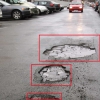
Computer Vision Pothole Detection

Open-Source Alternatives: When They Make Sense