Roadwurx Launches Municipal Referral Program to Reward Highway Departments for Sharing Success

Published on November 3, 2025
Across towns, counties, and public works departments of all sizes, one truth is constant: road maintenance is a never-ending responsibility that demands clear records, defensible data, and efficient planning. Yet many local governments still rely on spreadsheets, filing cabinets, or handwritten logs to manage millions of dollars’ worth of infrastructure. Asset management software is no longer a luxury reserved for large cities-it is a practical necessity for every road department that wants to operate transparently, protect itself from liability, and make the most of limited budgets.
At its core, asset management software provides a central, organized system to track roads, culverts, signs, fleet vehicles, drainage structures, and other assets. More importantly, it transforms raw maintenance data into useful information-records that are defendable, auditable, and ready to support decisions when the stakes are high.
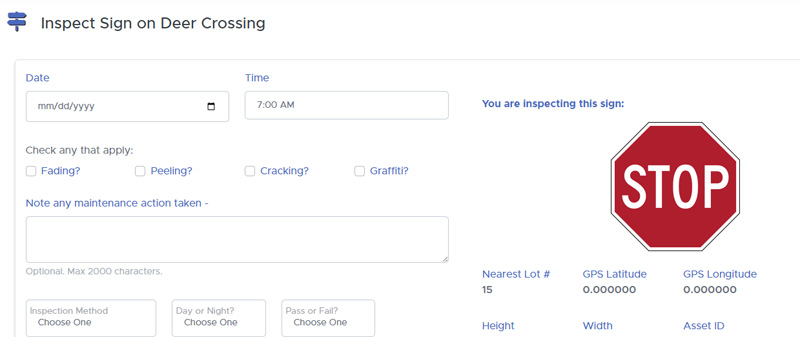
A key advantage is the creation of defensible records. When claims arise over road conditions, drainage failures, or signage, departments must be able to demonstrate maintenance history and inspection schedules. A paper trail that lives in someone’s office drawer is difficult to verify. Digital records, on the other hand, show who performed the work, when it was done, and what the results were. This level of documentation not only protects the department from potential liability but also builds public trust in its operations.
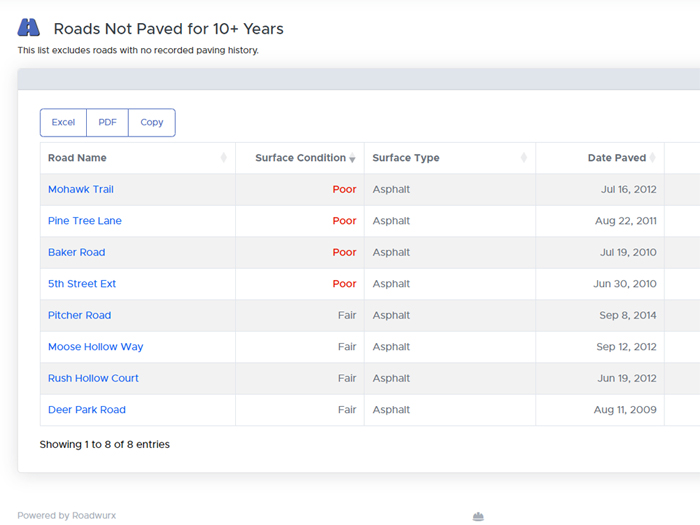
Equally important is the ability to prove what has been accomplished. Highway superintendents and public works directors can generate reports that quantify how many miles were paved this year, how many culverts were replaced, and how much was spent maintaining specific assets. These records provide clear evidence of productivity, which helps justify funding requests and supports the department’s case during annual budget meetings.
Asset management systems also bring efficiency and foresight to long-term planning. Instead of reacting to emergencies, departments can identify trends-such as a road segment that repeatedly fails inspection or a vehicle that consumes excessive repair funds-and plan replacements or repairs before problems escalate. This data-driven approach results in fewer surprises, more predictable costs, and improved service life for public infrastructure.
Another overlooked benefit is knowledge continuity. When experienced staff retire or change roles, decades of institutional memory often leave with them. A centralized software platform preserves this information, ensuring that future employees can access complete maintenance histories, inspection notes, and project details.
Modern asset management tools are also adaptable to department size and budget. Cloud-based systems have made it possible for small towns to enjoy the same capabilities once reserved for larger agencies-without needing in-house IT staff or costly servers. Subscription pricing and modular features mean each department can scale its software to match its specific needs.
In the end, adopting asset management software is not just a matter of convenience-it is a professional obligation. It allows road departments to prove their diligence, secure funding with confidence, protect themselves from risk, and serve their communities with transparency and accountability.
No matter how small or large the jurisdiction, the road department’s responsibility is the same: maintain public assets safely, efficiently, and responsibly. Asset management software empowers every superintendent, foreman, and crew to do just that, transforming everyday work into measurable, defensible progress.

Roadwurx Launches Municipal Referral Program to Reward Highway Departments for Sharing Success

Why Every Road Department Should Use Asset Management Software

Breaking Silos: Using Shared Dashboards for Cross-Departmental Visibility

5G + Edge Computing for Adaptive Traffic Signals
Computer Vision Pothole Detection

Open-Source Alternatives: When They Make Sense