Roadwurx Launches Municipal Referral Program to Reward Highway Departments for Sharing Success

Published on April 24, 2025
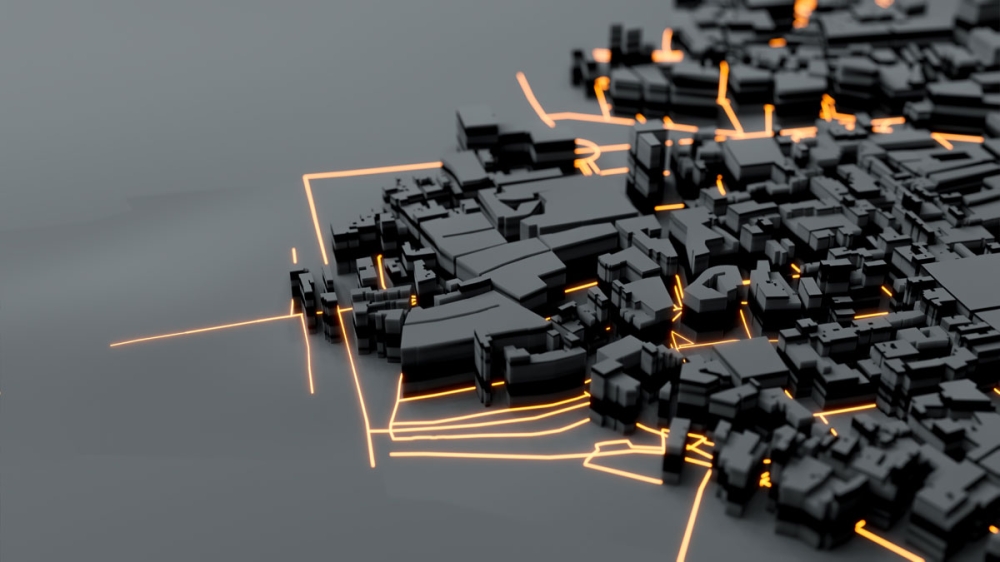
A digital twin is a dynamic, data-driven replica of a physical asset, network, or entire city. It merges real-time sensor feeds, 3-D models, historical records, and analytics so staff can visualize conditions, test scenarios, and manage infrastructure more efficiently.
Data capture: LiDAR, drones, SCADA, and IoT sensors stream condition and performance data into a common platform.
Integration: GIS layers, BIM models, and asset records are federated in the cloud, giving a single source of truth.
Simulation: Physics engines and AI run “what-if” analyses on traffic flow, water pressure, flooding, or energy load.
Feedback loop: Insights guide field crews and capital planners, while new data continually refines the model.
| Benefit | Examples | Typical Payoff |
|---|---|---|
| Predictive maintenance | Roadway distress detection, leak forecasting in water mains | Fewer emergency repairs, lower lifecycle cost |
| Capital project planning | Test bridge alignment options, visualize skyline impacts | Reduced design rework and faster approvals |
| Resilience and climate adaptation | Simulate storm surge or heat-island effects | Data-driven mitigation investments |
| Sustainability reporting | Track embodied carbon, energy use, and runoff reduction | Progress toward ESG goals and grant compliance |
| Stakeholder engagement | Immersive 3-D public meetings | Stronger community buy-in |
Bologna, Italy is building a city-scale twin that links mobility, energy, and climate adaptation data to support policy decisions. 1
United Kingdom created a National Digital Twin Programme to standardize data sharing across sectors2
Singapore’s “Virtual Singapore” allows agencies to model shade, wind, and evacuation routes in a richly detailed 3-D city model.3
Des Moines, Iowa uses a downtown digital twin to evaluate sight-line regulations and building proposals, accelerating economic development.4
Jackson, Mississippi turned to a water-system twin to pinpoint leaks and improve service reliability after repeated outages.5
A recent refinery project showed that embedding a digital twin shaved years off construction time, cut water and energy use by more than 50 percent, and reduced carbon emissions by 70 percent.6
A 2024 Reuters survey found more than 500 cities expected to deploy digital twins by 2025, with applications ranging from flood management in Houston to traffic optimization in Los Angeles.7
| Challenge | Mitigation Tactics |
|---|---|
| Data silos and inconsistent formats | Adopt open data standards (e.g., Information Management Framework from the UK NDTP) |
| Cybersecurity | Apply zero-trust architecture, encrypt OT traffic, and require vendor SOC 2 Type II attestation |
| Privacy | Aggregate or anonymize personally identifiable data before ingestion |
| Change management | Start with a pilot, train staff on data-driven workflows, and celebrate quick wins |
Pick a high-impact pilot: Common entry points are water leakage detection or traffic-signal timing.
Build the data backbone: Update GIS, digitize paper as-builts, and deploy sensors where data gaps exist.
Select platforms and partners: Look for interoperability, open APIs, and proven municipal references.
Design KPIs: Track response time, cost per lane-mile, carbon reduction, or other metrics that matter to elected officials.
Plan for scale and funding: Leverage federal programs such as the US DOT SMART Grants or IIJA, and include digital-twin language in RFPs to future-proof contracts.
As sensor costs drop and AI models mature, digital twins will move from pilot projects to foundational infrastructure for cities of all sizes. Municipalities that invest now will gain better resilience, budget predictability, and public trust.
Eurocities, “Urban Digital Twins: Transforming City Planning and Governance.” (eurocities.eu)
Centre for Digital Built Britain, “National Digital Twin Programme Overview.” (cdbb.cam.ac.uk)
Smart Nation Singapore, “5 Things to Know About Virtual Singapore.” (tech.gov.sg)
Axios, “Des Moines Has a ‘Digital Twin’ That Drives Development Decisions.” (axios.com)
American Water Works Association, “Digital Twins Case Studies in Water Utilities.” (awwa.org)
Bentley Systems, “Sustainability Stories: Digital Twins Lower Costs and Carbon by Over 50 Percent.” (blog.bentley.com)
Reuters, “How AI Is Arming Cities in the Battle for Climate Resilience.” (reuters.com)
Roadwurx Launches Municipal Referral Program to Reward Highway Departments for Sharing Success
Why Every Road Department Should Use Asset Management Software

Breaking Silos: Using Shared Dashboards for Cross-Departmental Visibility
5G + Edge Computing for Adaptive Traffic Signals
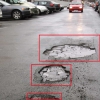
Computer Vision Pothole Detection

Open-Source Alternatives: When They Make Sense